Skip to content
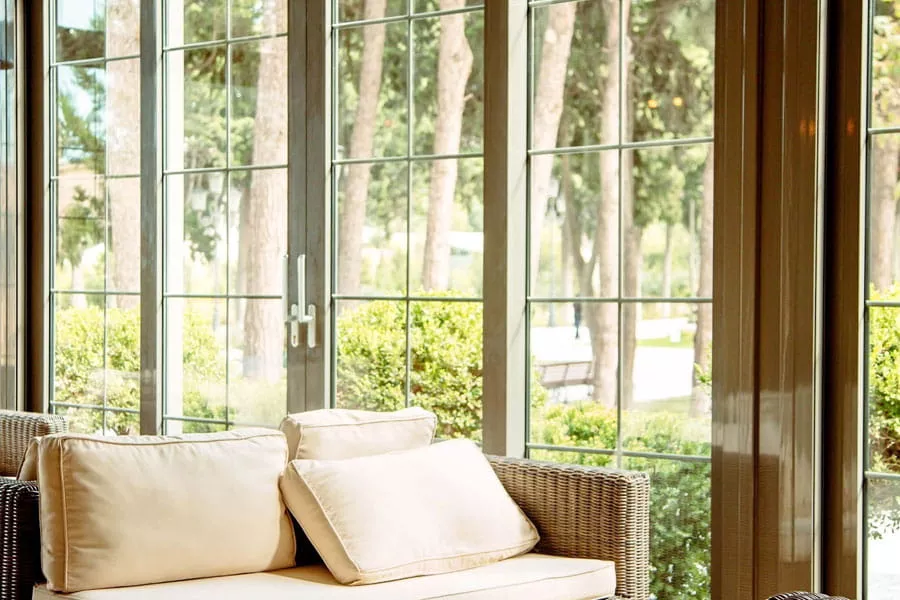
A large number of homeowners want more space. They do not always want a full addition. Therefore, a sunroom has become a popular option. It provides light, comfort, and an additional living area. And yet this brings about another crucial question many would want to be answered: Does a sunroom increase square footage?
It all will depend on several factors. It depends on building codes, insulation, heating system, and the quality of construction. By knowing these things, house owners can make better renovation choices.
Understanding Square Footage in Home Additions
The square footage calculates the size of the living area in a house. There are strict rules for calculating it by real estate professionals. Thus, not all rooms are counted automatically.
For example, garages, unfinished basements, and porches are usually not included in livable square footage. On the same note, other sunrooms might also fail to do so.
Nonetheless, some of these sunrooms are considered square footage. The division is based on the fact that the space should correspond to the residential living standards.
Therefore, the question, “Does a sunroom add square footage?” does not have a simple yes or no answer.
When a Sunroom Counts as Square Footage
A sunroom may count as square footage if it meets several requirements.
- First, the space should have access to the house. The sunroom must have a permanent access door to the main living room.
- Second, the room should be provided with adequate insulation. Ensured is the maintenance of indoor temperatures through insulated walls, floors, and ceilings.
- Third, the room should be supplied with heating and cooling systems. The sunroom can be used throughout the year through the inclusion of HVAC.
- Lastly, the construction should be in accordance with the other parts of the house. The space is also qualified with similar materials and finished flooring.
In such circumstances, the sunroom can be considered a livable square space.
When a Sunroom Does NOT Add Square Footage
These standards are not all sunrooms. Others are three-season rooms or enclosed patios. For example, an insulinless sunroom cannot be considered an interior space. Similarly, rooms that are not air-conditioned or heated are usually ineligible.
Also, temporary buildings can be excluded. Removable glass panels or aluminum frames are occasionally included in this category. So, the question many homeowners are still asking is: Does a sunroom add square footage when it is a seasonal one?
In the majority of the cases, the answer is no. Nevertheless, the room adds to the amount of available space and pleasure.
Different Types of Sunrooms
This knowledge of the types of sunrooms makes it possible to understand why certain sunrooms are considered square feet.
Three-Season Sunrooms
The sunrooms with three seasons operate in the spring, summer, and fall seasons. Nevertheless, they do not have complete insulation and HVAC systems. Hence, they typically do not add up to the official square footage.
Four-Season Sunrooms
Sunrooms with four seasons are used as ordinary rooms. These are insulation, windows, electricity, and climate control. By virtue of this, they tend to be classified as livable square footage.
Screened Sunrooms
Mesh walls are simply incorporated in screened sunrooms. They are insect-proof but not weatherproof. As such, these areas virtually never fall under the square footing.

Sunroom Real Estate Value
The addition of a sunroom, even though it is not considered square footage, is still beneficial. Customers are fond of natural light rooms. Sunrooms provide a comfortable space where one can read, dine, or host their visitors. Consequently, they enhance the attraction of a home.
Sunrooms are some of the premiums that real estate agents frequently emphasize. As a result, the homes that have sunrooms can be sold more promptly. Nonetheless, official square footage tabulations continue to rely on the building standards.
Building a Sunroom the Right Way
A sunroom has to be thought through. Homeowners are expected to think about comfort in the long run and property value.
- First, select quality materials. There is built-in strong framing and insulated windows.
- Second, connect the room to the HVAC system of the home. This measure helps in supporting year-round usage.
- Third, abide by local building codes. Compliance is done with proper permits and inspections.
- Last but not least, employ skilled contractors. Expert workers construct sunrooms that are structurally fit.
At Masterful Construction Inc, we assist homeowners in coming up with sunrooms that are beautiful and functional. We assist the clients with planning, permits, and construction. A large number of projects, therefore, comply with livable square space demands.
Key Benefits of Adding a Sunroom
Sunrooms are not only a source of additional space. They enhance comfort, way of life, and home design.
- First, they introduce natural lighting. Bright interiors are larger and more welcoming.
- Second, they form living spaces that are versatile. Families use sunrooms as dining rooms, leisure rooms, or offices.
- Third, they unite the outside and the inside. There are large windows with garden and landscape views.
- Lastly, they enhance the attractiveness of the property. Sunrooms are luxury items that buyers perceive.
This means that even when the homeowner does not count the room officially, s/he still benefits.
Professional advice is significant in case you want to build a sunroom. Masterful Construction Inc. plans and constructs your sunrooms in perfect combination with your house. Our skillful workers are concerned about the craftsmanship, strength, and intelligent design to allow homeowners to spend a number of years in their sunrooms.